

Conference on “Agri-Food Law in Forest Production” held on 3 March 2026
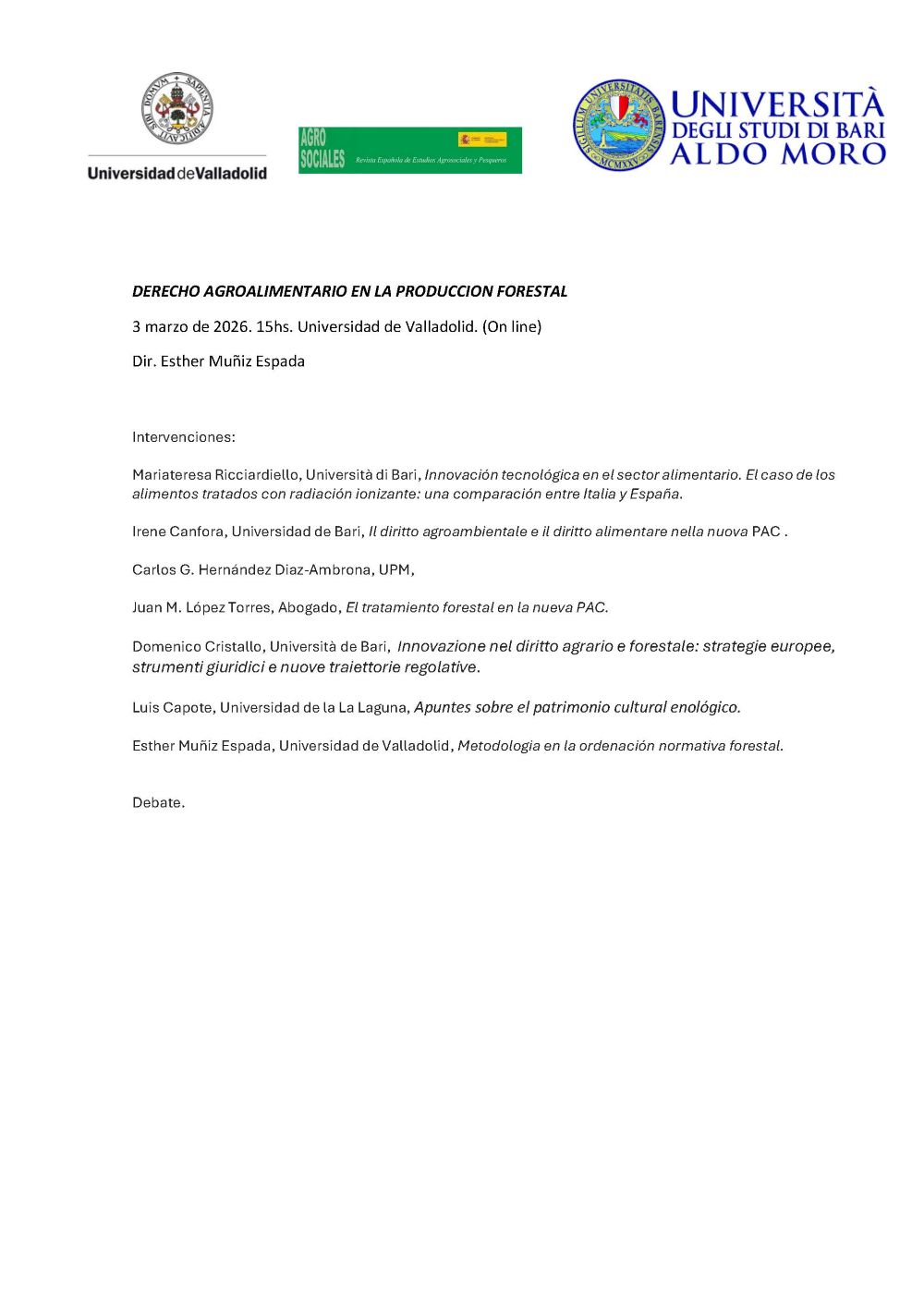
The growing interconnection between agri-food law and forest production highlights the need for an integrated legal approach capable of addressing challenges related to sustainability, technological innovation, and market regulation. In this context, the conference “Agri-Food Law in Forest Production” emphasised the role of the Common Agricultural Policy (CAP) as a key instrument for linking agricultural, forestry, and food policies.
A comparative analysis of different European legal systems demonstrated the evolution of agro-environmental law and its impact on the regulation of the food chain, as well as the importance of incorporating technological developments and new regulatory strategies. In addition, the conference addressed issues such as innovation in the agri-food sector, the valorisation of cultural heritage—particularly wine-related heritage—and the need for appropriate legal methodologies in forest regulation.
Overall, the conference provided a platform for reflection on the interaction between agricultural, forestry, and food law, underlining the importance of a coordinated regulatory framework to foster sustainability, innovation, and competitiveness within the European context.
The University of Valladolid hosted, on 3 March 2026, an online conference on “Agri-Food Law in Forest Production”, directed by Esther Muñiz Espada. The event brought together experts from Spanish and Italian universities to analyse the links between agri-food law and forest production from a legal and interdisciplinary perspective.
Key Contributions
-
Mariateresa Ricciardiello (University of Bari): Examined technological innovation in the food sector, focusing on foods treated with ionising radiation through a comparative analysis between Italy and Spain.
-
Irene Canfora (University of Bari): Analysed the relationship between agro-environmental law and food law within the framework of the new CAP, highlighting its regulatory evolution.
-
Carlos G. Hernández Díaz-Ambrona (UPM): Contributed to the discussion on agroforestry production from both a technical and legal perspective.
-
Juan M. López Torres (Lawyer): Addressed the treatment of forest areas under the new CAP, focusing on their integration into European agricultural policies.
-
Domenico Cristallo (University of Bari): Analysed innovation in agricultural and forest law, highlighting European strategies, legal instruments, and emerging regulatory trends.
-
Luis Capote (University of La Laguna): Reflected on wine-related cultural heritage and its relevance within the agri-food framework.
-
Esther Muñiz Espada (University of Valladolid): Presented methodological approaches to forest regulatory planning, emphasising the need for structured legal frameworks adapted to current sector challenges.
Conclusions
The conference concluded by highlighting the need to strengthen the integration between agri-food and forest law, promoting a regulatory framework capable of addressing challenges related to innovation, sustainability, and the evolution of the CAP. It also underscored the importance of interdisciplinary approaches and international cooperation in developing more effective and responsive policies for the sector.